Deploying OCI APM Service for Optimal EBS Application Observability


The OCI Application Performance Monitoring (APM) service allows administrators to monitor and observe the E-Business Suite web applications.

It provides deep visibility into the application performance from end-user experience down through to the application server requests.

For many customers, the E-Business Suite (EBS) Application is critical to business operations. With OCI Application Performance Monitoring (APM) service, administrators can:

  • Analyze all end user experience with accessing EBS web and form pages.
  • Trace transactions across various components and isolate problems to the impacting application or infrastructure tier.
  • Has ability to drill into application code and SQL calls to the database
  • Easily Capture End Username for user sessions without modifying application code
  • To search in context, you can use out of box EBS attributes auto generated from traces. These attributes include:
    – EBS Function Name
    – EBS Class Package Name
    – EBS Forms Name
    – and more ….
Continue reading “Deploying OCI APM Service for Optimal EBS Application Observability”

Certificate expiry monitoring in Oracle Cloud Infrastructure

I’m sure we’ve all experienced it, either as a user, or as a system administrator. You know, that important SSL certificate everyone forgot about so didn’t renew, and now has expired?

When an SSL/TLS certificate expires it can create a number of problems, including:

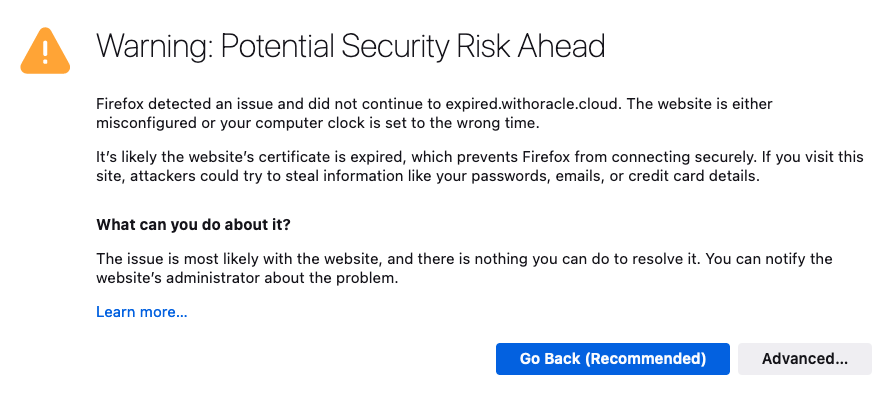
  • Users’ web browsers will display warning messages, indicating that the website’s connection is not secure. This can lead to a loss of trust and deter user engagement.
  • API clients will often refuse to establish a connection if an SSL certificate is not valid potentially disrupting crucial data exchanges and integrations.
  • Search engines may flag the site as unsafe, leading to a drop in rankings and reduced organic traffic.

Also regularly encountering certificate warnings conditions users to accept future certificate errors, which makes them more likely to accept an SSL certificate warning should they be targeted in a Man In The Middle Attack.

To avoid these issues, it’s important to have enough advance warning that a certificate is going to expire so you can obtain a new one, install, and test it thoroughly.

If you’re already using Domain Validated (DV) certificates, such as those issued by Let’s Encrypt you might want to consider my automated Let’s Encryption Solution. This solution automatically handles the entire certificate lifecycle using serverless functions inside OCI. For those who prefer to bring their own certificates, these can be imported into OCI’s certificate service.

As at June 2023, certificate expiry monitoring in OCI is primarily focused on certificates associated with Load Balancers. To improve monitoring, I’ve developed a serverless solution that examines all certificates expiration dates. The solution emits logs and sends email notifications, also allowing for customisable lead time to align with your organisation’s certificate procurement process. Logs can also be forwarded to your SIEM solution if required.

Continue reading “Certificate expiry monitoring in Oracle Cloud Infrastructure”

OCI IAM Domains User Access Review

One of the recent additions to Oracle Cloud Infrastructure (OCI) is IAM Domains. New OCI tenancies are provisioned with IAM Domains and at time of writing tenancies with IDCS instances are being migrated to IAM Domains.

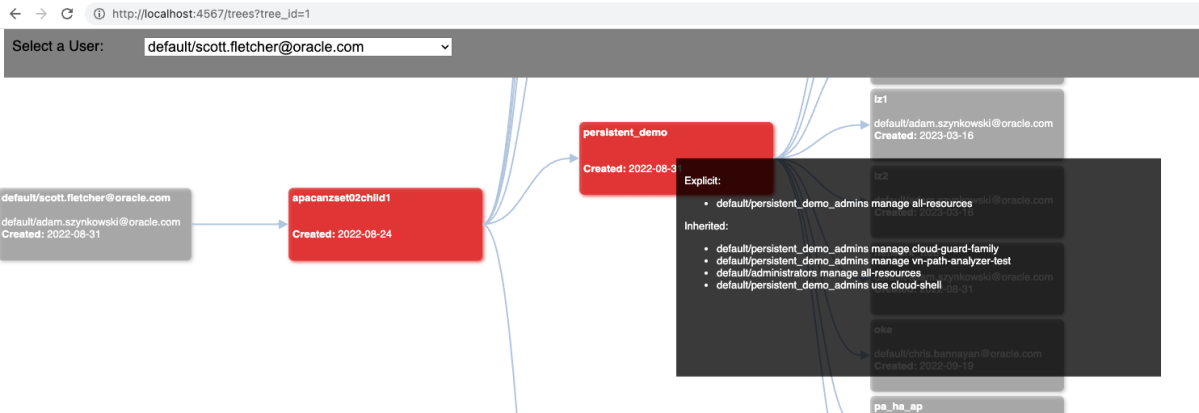
I originally created Peek to create a visual representation of effective user permissions inside an OCI tenancy to assist with performing user access reviews. Excessive permissions and IAM misconfigurations are a common issue found in cloud environments that can lead to privilege escalation and/or unauthorised access to resources and data.

At time of writing the latest release of the OCI CLI now supports interacting with IAM Domain resources and so I have created a version of Peek that works with IAM domains.

Continue reading “OCI IAM Domains User Access Review”

Automating Security List Rule reviews in Oracle Cloud Infrastructure

If you’re running workloads in Oracle Cloud Infrastructure (OCI) then it’s likely you’ll be familiar with Virtual Cloud Network (VCN) resources such as Subnets, Route Tables, Gateways etc. These software defined components allow you to build networks in OCI for you to deploy and run your workloads.

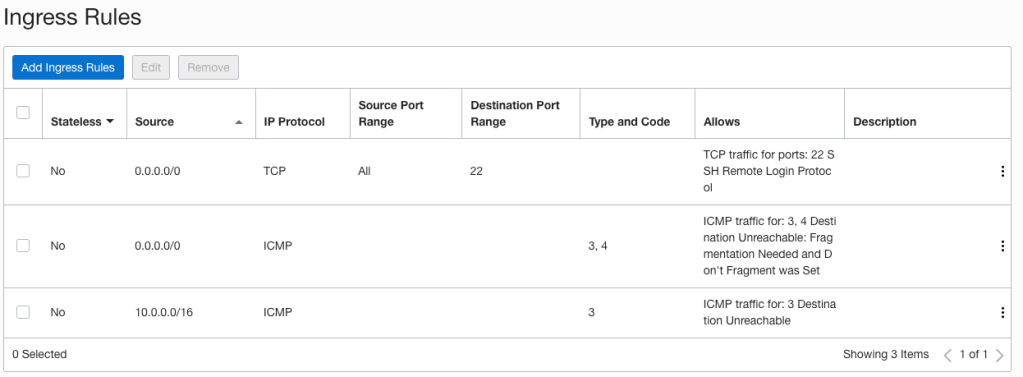
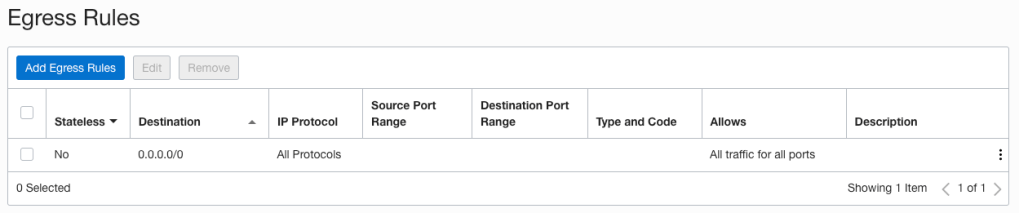
Oracle has documentation that explains VCN access and security features which include things like Security Rules, Security Zones, Local and Network Firewalls, and IAM policies. Security rules are made up of Security Lists and Network Security Groups (NSG’s) and are a foundational element of every VCN and Subnet that you create. They define what traffic is allowed in and out of your subnets and what hosts can talk to one another. When you create a subnet a Security List is automatically created with some default rules:

Default Security List Ingress Rules
Default Security List Egress Rules

When it comes to implementing network access controls, you can use Security Lists, Network Security Groups or both. They are virtual firewall features that control traffic at the packet level. I’ll be covering Network Security Group reviews in a later post as I want to focus on Security Lists, specifically how you can easily review and validate rules to ensure they align with your workload, organisational, security and compliance requirements.

Continue reading “Automating Security List Rule reviews in Oracle Cloud Infrastructure”

Import Logs to Logging Analytics & Preserving Log Sources

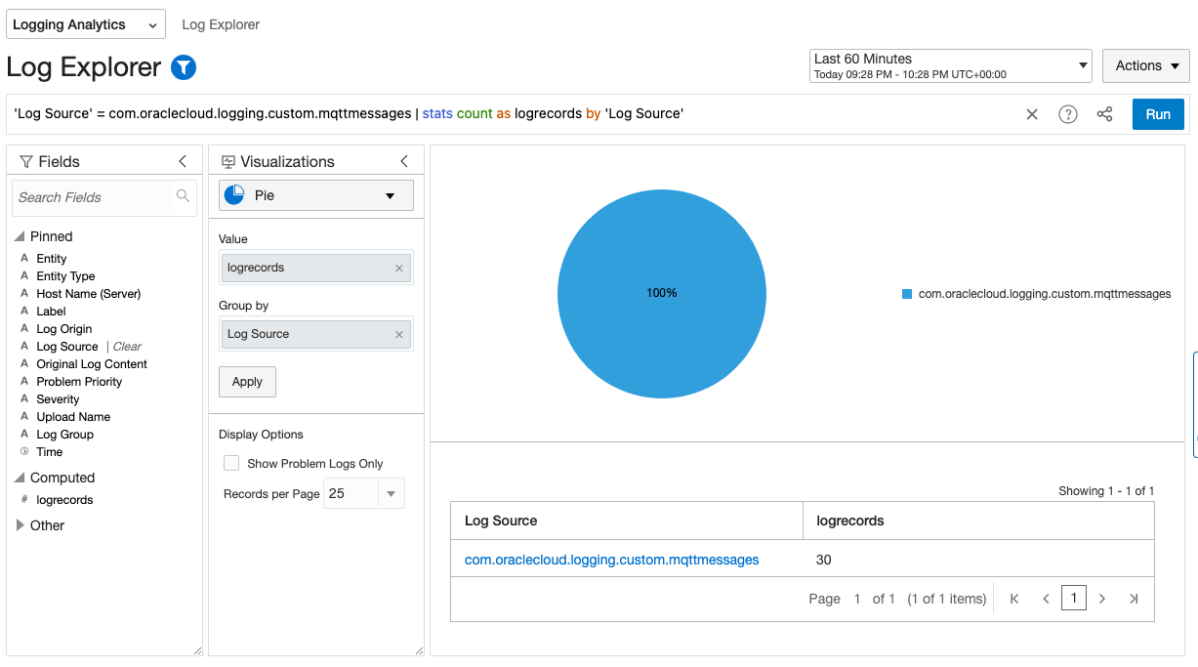
In the world of cloud computing there are often multiple ways to achieve the same or similar result. In Oracle Cloud Infrastructure (OCI) logs are generated by the platform itself such as audit logs, OCI native services such as the Network Firewall Service, and custom logs from compute instances or your applications. These logs typically live in OCI logging where you can view them, or search them if required.

Collecting and storing logs is useful, however if you want to produce insights then you will need a way to analyse and visualise the log data. OCI Logging Analytics allows you to index, enrich, aggregate, explore, search, analyse, correlate, visualise and monitor all log data from your applications and system infrastructure.

From OCI logging there are two common ways in which logs can be ingested into Logging Analytics. The first is using a Service Connector to send logs to an Object Storage bucket, and an Object Collection Rule to then import the logs into Logging Analytics. The second option uses a Service Connector to send the logs directly to Logging Analytics. Both are valid options however require some consideration before use.

Continue reading “Import Logs to Logging Analytics & Preserving Log Sources”

A Better Mechanism for Periodic Functions Invocation?

Update: There is now an even better way to do this, with first-class support from the OCI Resource Scheduler – just set it to ‘Start’ your Function, and it will be invoked based upon the configured schedule.

Functions in Oracle Cloud Infrastructure are great. As a serverless execution environment with pre-built logging, metrics, etc. it allows developers to simply focus on their code and not worry about all of the supporting infrastructure, while still providing a lot of flexibility through the use of container primitives. As great as Functions are, they are reactive, they can only be invoked and can’t natively be configured to be executed in a spontaneous or scheduled manner. Often this won’t matter, as Functions will be invoked directly or indirectly by users, or in response to events, but sometimes you simply need a bit of code to run periodically.

Continue reading “A Better Mechanism for Periodic Functions Invocation?”

#BuildWithAI 2021 – Another Step

Last weekend (from Friday 29th Oct to Tuesday 2nd Nov), was the #BuildWithAI Hackathon 2021 where participants, mentors, sponsors and organisers gathered together to solve real world challenges with AI. This event does not standalone. In a world full of change, this (from my perspective) started last year in the #BuildWithAI Hackathon 2020 and continued to build.

This article is about the event but the event itself is just “Another Step”.

Continue reading “#BuildWithAI 2021 – Another Step”

Using OCI Bastions with PuTTY

Recently, Oracle rolled out the OCI Bastions service, which is designed to simplify the process of accessing instances which do not have a public IP address. They are really easy to use, with simple commands to allow access to these internal hosts… if you are using a Unix shell. Unfortunately I suffer from being quite wedded to various tools, and as a Windows user, I tend to use PuTTY to access hosts via SSH, so this blog post will detail both the OCI Bastion service in a little more detail, as well as how I continued to resist changing my old habits, and set up connections using the OCI Bastion service using a number of components of the PuTTY suite of tools.

Continue reading “Using OCI Bastions with PuTTY”

Custom User Activation and Password Reset Flows in Oracle IDCS

Oracle’s Identity Cloud Service is typically associated with its role in acting as the primary identity store for Oracle’s Cloud services – acting as the gatekeeper for administrators and developers, and providing single-sign-on across Oracle services for end users. However, thanks to its API-first design, it is also very capable of acting as a headless OAuth server and user store, providing authenticated access to custom applications and APIs. When these custom applications are customer facing, you will want fine-grained control over your user experience, without them interacting with IDCS directly. In this post we will explore implementing custom user activation and password reset flows; which provides the opportunity to implement pixel perfect UIs, modify the flows for different classes of users, or just do whatever your custom application requires.

Continue reading “Custom User Activation and Password Reset Flows in Oracle IDCS”

Autonomous Digital Assistant to Human Agent seamless Handoff

In earlier articles, I discussed Autonomous Digital Assistantprovisioning a Digital Assistant, building skills and making it multi-lingual. In this post, I would like to take the discussion forward to address certain scenarios where there is a need for Human Intervention when the Bot cannot handle the conversation and instead redirect the chat to a human agent.

Continue reading “Autonomous Digital Assistant to Human Agent seamless Handoff”