Intelligent Bots improve customer experience

“Your call is important to us. Please continue to hold” Does this sound familiar? Imagine the frustration at the other end of the line your customers have to go through while the query might be as simple as “what is my credit score ”?

In this new digital world if a customer has to wait for 15–30 mins to speak to an agent there is something fundamentally wrong with the way an Enterprise operates. Throwing more agents to respond to queries or moving your call center to a developing country is definitely not the way you want to scale and reduce your call time to few seconds. How do we solve this problem? We need an intelligent virtual assistant or a chatbot that can understand the natural language, process the query, talk to one or more systems in the background, aggregate the information from these systems and provide a response instantly so that the customer can easily digest.

Continue reading “Intelligent Bots improve customer experience”

Apiary designed APIs tested using Dredd

APIs are becoming the window to the digital assets of the modern business. Well documented, well governed and easy to use APIs are key to their successful uptake, longevity and associated business success. Yes, I did say well documented. In this instance I am talking about the documentation required to describe the APIs capabilities in a manner that is meaningful for your ultimate audience, the “API Consumers”, however it will also provide the template for the API Developer to develop their code from. In the modern business climate, we probably don’t want to produce War and Peace, we simply want to take a minimum viable approach to our API documentation. But where would I find a capability that will simplify our task as API Designers, capture the design documentation for our APIs, allow us to do some initialise testing to validate the usefulness of our design before any code is cut, and also have the documentation ready for consumption by team members and interested parties using a standards based approach. Where indeed ! Look no further than Apiary.io. Continue reading “Apiary designed APIs tested using Dredd”

A New Hackathon Experience

This week I was attending a customer event. It was an interesting learning experience on different levels. It was a great opportunity to meet some people that I would not normally would be.

It was a hackathon put on by MLC Life Insurance (#MLCLifeHackathon) and we (as Oracle) were happy to support them as one of their partners. I’ve been to other hackathon events but they were organised differently. So I was curious to see what their objectives were. It would too easy to be cynical. With an open mind, I was happy to be part of their journey.

Continue reading “A New Hackathon Experience”

It’s an Adaptive and Emotional World

designingproductsforadaptabilityetceventbritepicture

Last week I had the opportunity to pop into QUT Foundry and attend an event called Designing Products For Adaptability, Innovation & Sustainability. It was a great experience and there were lots to learn about it. The guest speakers included Prof. Tyson Browning from TCU visiting from Texas and Dr. Rafael Gomez from QUT. It was an opportunity that I embraced to meet new people and be part of a growing community.

Read More Here to read about what happened.

More Stories To Digital Impact Radio

Digital Impact Radio has been a growing podcast where we’ve been talking to different people in the industry about technology and the impacts upon themselves, their businesses and the industry at large. Currently, it’s been something that’s been driven through our own networks and Oracle people interviewing others that we meet.

Read More Here to read what changes we’re making to bring more stories to you.

It takes a village …

I’ve recently updated my twitter and medium descriptions.

It takes a village to grow. Community, friends and family are important to me.

I’ve written about it in a recent article hosted on medium titled It takes a village … I talk about what it means and what I’m trying to do. And it will take a village. If you are interested, contact me and let’s do this together.

It’s not always about the Tech …

I’m starting a series of blogs and collective content around “not just the tech”. This is where the inspiration has come from and a general observation:

Continue reading “It’s not always about the Tech …”

Oracle IoT – Working with Bosch Devices

How to use the Bosch XDK with the Oracle IoT cloud service.

Introduction

As I continue to work with various IoT vendors to see how they could be used with the Oracle IoT cloud service, I came across one of these nice little Bosch XDK kits.

bosch-xdk

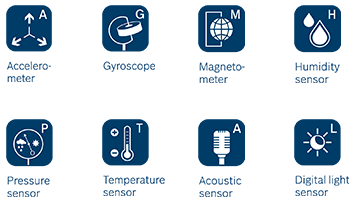
This is a demo kit to show off the many Bosch sensors available and give people an environment for prototyping.  Here are some of the built-in sensors:XDK Sensors

The device has built-in wifi and Bluetooth LE.

My goal was to get this to periodically send sensor data into the IoT cloud service and make it easy for others to do the same.

Continue reading “Oracle IoT – Working with Bosch Devices”

Access Management and Micro-services – Part 4: Enabling Other Teams and Inter-Service Authentication

Previously in this series we have examined what is required on an Access Management side in order to support a micro-services architecture, providing services for authentication, user management, assurance, etc. In this post, we expand the scope, looking at how to enable new services to easily implement access and authorisation appropriately, as well as a discussion about how they can authenticate to each other. Ultimately the creation of a secure system involves security of all parts, not just the access management services which facilitate it, and so this post focuses upon working towards enabling that. Security is also built upon organisational culture, and while it is a little difficult to instil that through a blog post, taking steps to create a technical foundation which allows the Access Management teams to be open and collaborative instead of being the team that says ‘no’ is unlikely hinder such cultural development.

Continue reading “Access Management and Micro-services – Part 4: Enabling Other Teams and Inter-Service Authentication”

Access Management and Micro-services – Part 3: Advanced Authorisation and Assurance

Continuing from the previous post which dealt with the core concepts around performing authentication and authorisation in a distributed environment, this post expands upon those concepts, looking at additional factors for authorisation decisions, including supplementary information, authentication challenges and risk assessment. While basic authentication and authorisation requirements can be met through the use of JWTs and OAuth, this post shifts to tackling bespoke requirements, outlining potential services which could provide capabilities above and beyond what is captured in those standards.

Continue reading “Access Management and Micro-services – Part 3: Advanced Authorisation and Assurance”